

Our Values and Philosophy
Collaboration – Community – Culture
We are committed to strengthening Autism and Neurodiversity as autonomous cultures, as well as preserving, promoting and proliferating the practice of Dialogue as a primary means of communication in all human life.
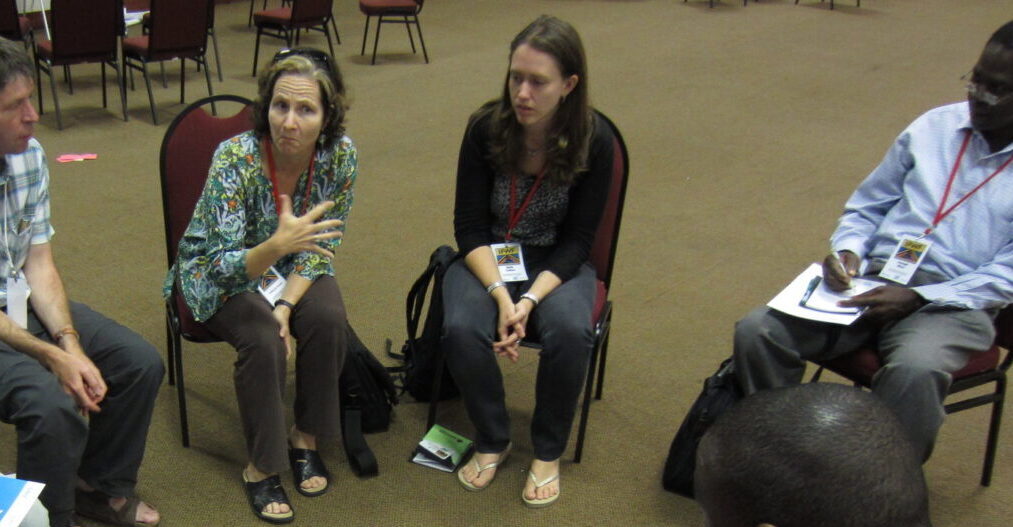
Group dialogue has been at the core of traditional and indigenous life, in societies who have thrived for centuries by fostering a deep sense of interconnectedness and harmony through communal discourse, with each other and their environments.
Indigenous societies have a rich tapestry of oral traditions that serve as a primary mode of communication and to preserve cultural heritage, historical narratives, and indigenous wisdom.
Through storytelling, songs and rituals, indigenous peoples pass down knowledge from one generation to the next. The oral traditions are the lifeblood, not only binding families and communities but also ensuring the continuity of
their cultural identity.
The four principles of Dialogue are applied as our underlying core values. As we practise them formally, and live and work by them, they provide the foundations for cohesive community.
Respect | Listening | Authentic Voice | Suspension
These core principles help communities to function collaboratively and maintain a dynamic, common vision.
“They speak now through one mouth, now through another. Active currents within the group may be expressed or come to a head in one particular person, between particular persons, or may, in a sense, be ‘personified’ in individuals. But whatever is going on in the group is always regarded by us as a process developing in this total group.”
– S.H. Foulkes

Philosophy
“There are as many ways to God as there are breaths of men” – Ibn Arabi
Dialogue is a mutual inquiry based on the principle that the more points of view there are, the better we understand what there is to understand. Dialogue as we know it has much of its philosophical roots in Socrates. But of course, it has been part of human life since time began and continues for many indigenous peoples.
In the 1920’s in his work Dialogue, philosopher Martin Buber sought to highlight the spiritual dimension of the dialogic relation and inner ontological expression. Quantum scientist David Bohm has provided us with a dialogic model in his Theory of Wholeness and the Implicate Order and the seminal On Dialogue.
It is Bohm’s principle of the unfolding and enfolding of the implicate order in the cosmos and nature which is most pertinent to generative dialogue in the fields of Autism and neurodiversity.
Today we are also guided by the Enactive Theory led by Francisco Varela and from that tradition came the theory of Participatory Sense-Making:
“Contrary to traditional views, an enactive account sees both autistic and non-autistic sense-making as intrinsically valid and significant ways of dealing with the world. Autistic and non-autistic worlds may then be brought together, not by one-sided, normative adjustment of one to the other, but by understanding the differences and similarities between how they are constituted in perception and movement, and building bridges on this basis.” – Dr. Hanne De Jaegher
The Autism Dialogue Approach in groups works with a flowing, holistic style of language to correlate with the fundamental experience of Autism, a phenomenon of our time.
“In dialogue we look at the dynamic fields that arise in each moment, continually shifting among groups of people” – Prof. William Isaacs
“Autism is the direct perception of the forming of experience” – Prof. Erin Manning
“Dialogue helps us see dynamic processes by slowing down thought and language, together” – Prof. David Bohm
Our vision is to become a world leader in Autism and Neurodiversity Dialogue facilitation, coaching, counselling, consulting and training, applying Autistic-informed and values-based research and practice.

Research
Dialogue to us is a necessary social science, with existential, phenomenological and other philosophical underpinnings, and doesn’t share all of scientific ethos that mainstream cognitive science invites. Analogous to the equity design of Dialogue, research and evaluation is embedded into a fully participatory practice. Design, production and reporting are all carried out together with participants. We have a lot of anecdotal evidence drawn from our own co-produced evaluations and are working tentatively with external researchers into scientific validity of different iterations and contexts of our Approach. We are always happy to hear from researchers and evaluators with questions and proposal ideas. See our publications page

Dialogue, Autism and the Self
The word ‘dialogue’ is made from the Greek words dia, meaning across or between, and legein, meaning to communicate and find meaning. In this way we can see words and meaning flowing across and between our ever-changing perceptions of our selves.
Quantum Scientist Professor David Bohm advocated for a new mode of language he called the ‘rheo-mode’, which would give more emphasis to the verb instead of our noun-based language.
This approach to a more flowing, holistic language seems to correlate with the fundamental experience of Autism, a dynamic phenomenon, relating to the nature of ‘self’ in its very name, and manifests as ‘the direct perception of the forming of experience’ (Manning, 2015).
Bohm was concerned with the crisis of communication in society that he said leads to fragmentation of consciousness and society. He developed a primary technique of group dialogue, along with Peter Garrett and Donald Factor in the 1980’s. Our concerns delve beyond the ‘crisis of communication’ into addressing the fragmentation of ‘being’ and ‘interbeing’ and a perceived loss of selfhood, so prevalent in our world.
Our Aims
What’s it all for?
- To raise the status of Autistic and Neurodivergent people and those connected to them, especially families, communities and organisations.
- Release into society what we believe to be huge untapped potential in Autistic and Neurodivergent people.
- To improve cohesion of Autism and Neurodiversity communities through raising understanding, awareness and acceptance of Autism and Neurodiversity.
- To shift mainstream perceptions; replace negative, deficit-based stereotypes; show that all society benefits from the incorporation of neurominorities.
- To improve, enhance and strengthen inclusion of Neurodivergent people’s access to essential services and in the workplace where typically, learning is challenging and impacted by the environment.
- To negate the impact of challenging environments; reduce anxiety and stress; help reduce frequency and intensity of meltdowns, shutdowns and overloads; improve overall wellbeing and quality of life for Autistic and Neurodivergent people.


