

The Autism Dialogue Approach
A new way of understanding each other
What is Autism Dialogue?
Autism Dialogue is a unique synthesis of established social sciences, lived experience and creative innovation. As a novel method, it offers a safe, structured way to deepen understanding and connection between different neurotypes.
Developed collaboratively by Autistic and non-Autistic people, it redefines Autism not as a label but as a living inquiry into self, relationship and system – a way of seeing and being that can bring wholeness, healing and new insight.
Since 2017, Dialogica has hosted several long-form programmes in-person and online, serving hundreds of autistic and non-autistic people to explore autism communally and phenomenologically.
Through our online Autism Dialogue Approach Foundations training, we share the essential knowledge and practices needed to bring Dialogue into your personal or professional life — helping create more supportive and inclusive environments for Autistic and Neurodivergent people.

What is Dialogue?

Dialogue is not debate or discussion.
It’s a slower, more conscious way of being together: a facilitated, reflective conversation where we speak, listen and think together. There’s no pressure to agree or to perform. It’s a confidential space where authenticity, curiosity and mutual respect allow something new to emerge.
As one group participant said:
“Listening to Autistic people telling their stories in their own way has been a revelation. My mind has been opened.”
Dialogue bridges neurodiverse modes of communication, helping us find shared meaning across difference. It can be done in person or online, in groups or pairs, always with skilled facilitation — one facilitator will always be Autistic.
If you’d like to learn how Dialogue works and how to bring its principles into your own setting, visit our Training page.
Autism is not a disorder in the individual.
The scientific foundation.
Social cognitive science provides integrated insights from psychology, philosophy, neuroscience, linguistics, and computer science and is the interdisciplinary scientific basis for the Autism Dialogue Approach.
This framework, particularly through the work of Dr Hanne De Jaegher, posits that humans are the result of a long and continuous process of collaborative learning. Within this perspective, any relationship is viewed as a learning process that fundamentally changes both the individuals involved and their shared environment.
This science challenges the “deficit model” of autism. If cognition is a collaborative, interactive system, then “dysfunction” is often relational or systemic rather than existing solely within an individual.
The Autism Dialogue Approach draws on this interdisciplinary foundation to create “micro-communities” in which neurodivergent and neurotypical individuals can engage in generative dialogue, widely regarded as the highest form of collaborative learning.
The Four Dialogic Practices
At the heart of every Autism Dialogue session are four simple but powerful practices:
- True Voice – saying what needs to be said
- Listening – to yourself and to others
- Respect – for difference and commonality alike
- Suspending – judgement, assumptions and the urge to fix
Together, these create a space where people feel seen, heard and valued — and where genuine understanding can grow.
Our Values and Philosophy
Collaboration – Community – Culture
We see Autism and Neurodiversity as autonomous cultures, rich with ways of knowing and relating that benefit all of society.
Dialogue draws inspiration from indigenous traditions of communal conversation, where storytelling and shared inquiry sustain culture and harmony across generations.
Our philosophical roots include Socratic inquiry, Martin Buber’s I–Thou relationship, and David Bohm’s Theory of Wholeness. These perspectives help us explore the unfolding nature of communication, perception and selfhood — especially as they relate to the Autistic experience.
“Autism is the direct perception of the forming of experience.” – Prof. Erin Manning
“Dialogue helps us see dynamic processes by slowing down thought and language, together.” – Prof. David Bohm
Why it Matters
Modern life fragments our communication and sense of self.
The Autism Dialogue Approach offers a collective remedy – a way to reconnect, re-imagine and restore balance in ourselves and our communities.
Participants often describe a renewed sense of belonging, identity and peace.
“Absolutely transformational in accepting my diagnosis (20 years later!)” – participant
“It feels like a cocoon of support and a bridge between the autistic and neurotypical world.” – participant
Dialogue supports wellbeing, empowerment and recovery. It improves understanding between neurotypes and helps organisations become more compassionate, creative and effective.
Our Aims
- To raise the status of Autistic and Neurodivergent people and their families
- To unlock untapped potential through genuine inclusion
- To strengthen cohesion within Autism communities and beyond
- To shift public perception from deficit to diversity
- To foster environments – in workplaces, services and society – where all neurotypes can thrive
Join Us
Dialogue has the power to transform the way we communicate, work and live together.
Whether you’re an individual, educator, therapist or organisation seeking to deepen understanding, we invite you to begin your journey through our Autism Dialogue Approach Foundations online training and become part of a growing movement for change.
“Groups like this support life and can make it for the better.” – participant
Online Training
On-demand training for you or your organisation
Connect
Join our community
Get the Book
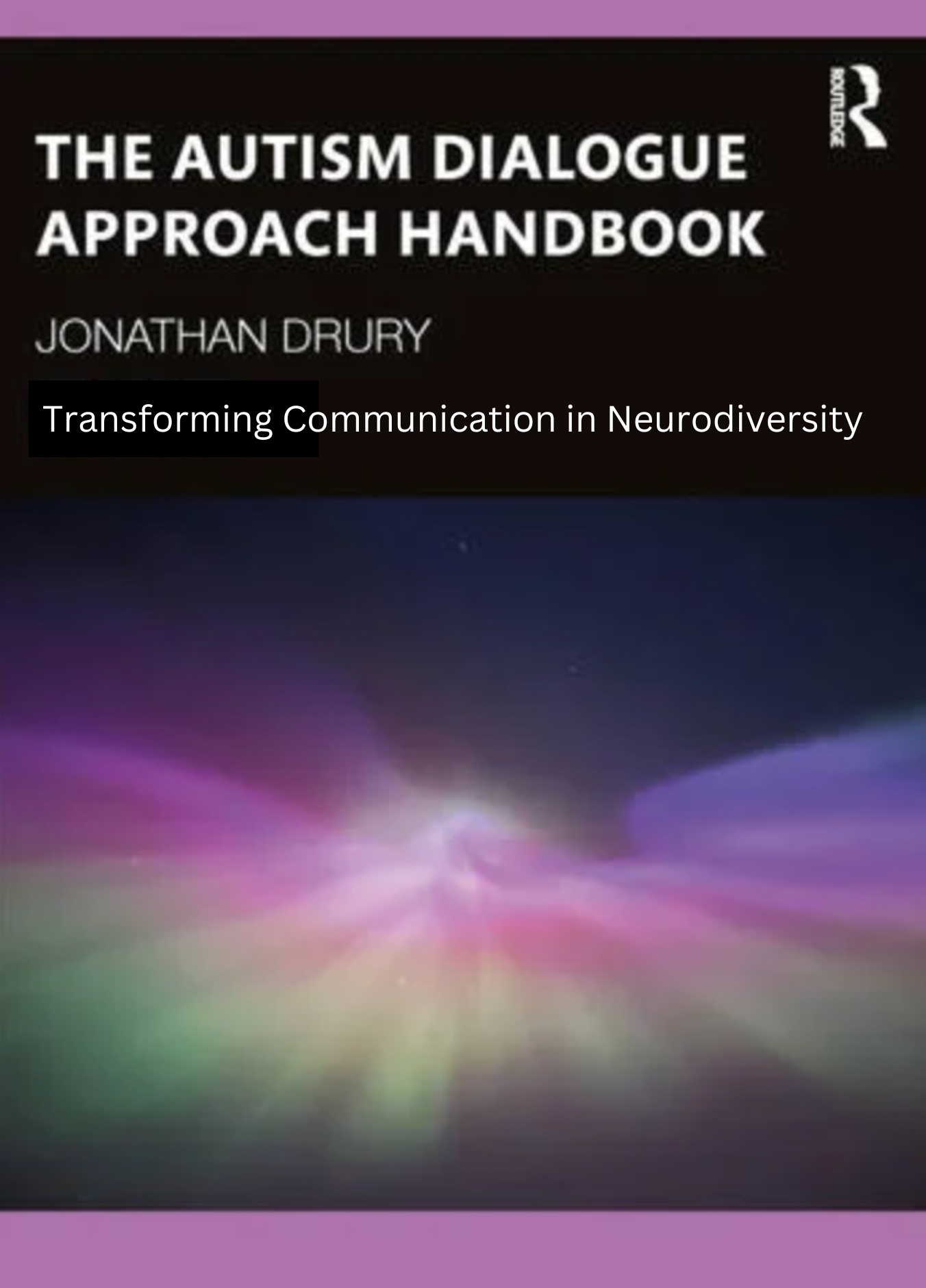
The Autism Dialogue Approach Handbook